
The School of Diplomacy Unveils its New Roadmaps to Success
Wednesday, December 10, 2025
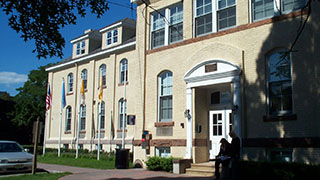
McQuaid Hall
The School of Diplomacy and International Relations has introduced a new Roadmap for Success, a tool designed to give students a clearer sense of what to prioritize at each stage of their academic and professional development. Created over the summer of 2025 with input from faculty leadership, the roadmap outlines what students should be doing from their first semester through graduation, helping them connect coursework, campus engagement and career preparation in a more intentional way.
Both the undergraduate and graduate versions center on three themes: succeeding academically, engaging with the Diplomacy community and preparing for a career. For undergraduates, the roadmap highlights early advising check-ins, exploring degree options, joining student organizations and making use of campus resources such as the Writing Center, ARC and CAPS.
As students advance, the roadmap encourages them to take on leadership roles, plan ahead for internships and begin refining their long-term goals. Senior year milestones include the senior project, the for-credit internship, graduation and steps toward joining the Diplomacy alumni network.
The graduate roadmap mirrors this structure but focuses on the shorter, more specialized nature of the graduate programs. It guides new students through meeting faculty, declaring specializations, getting involved in groups like the Graduate Diplomacy Council and the Journal of Diplomacy and exploring fellowships. It also stresses early internship planning, project completion and preparing for the transition into post-graduation careers.
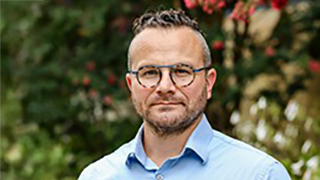
Martin Edwards, Ph.D., professor and Associate Dean of the School of Diplomacy, explained the purpose behind the new resource. “The genesis of this grew out of discussions about student advising across the university. Other universities have developed these nonacademic degree maps to help students couple their professional development with their personal and extracurricular development with their coursework.”
He noted that the School wanted to offer the same clarity. “We’re spelling out expectations in a clear way so that students will have a better sense of what they need to be doing to become more connected on campus, develop strong relationships with faculty and start to think about pathways to a career.”
After seeing the benefits of similar efforts elsewhere, the School adapted the idea for the Seton Hall Diplomacy community. “It became a summer project,” Edwards said, with the Joint Leadership Team offering feedback and Catherine Ruby, Ph.D., tailoring the graduate version.
The goal is simple, to give students a structured sense of what matters most at each step. As Edwards emphasized, “We want to make clear to students what they should be doing at what point in their careers to get where they need to go.” The roadmap also supports a broader institutional priority. “The University Strategic Plan calls for more holistic student learning experiences. By developing this, we’ve already met that objective.”
The undergraduate roadmap can be found here, and the graduate roadmap can be found here.
Categories: Education