
Deacons Showcase the Significance of Service and Diaconate Hospitality
Friday, February 27, 2026
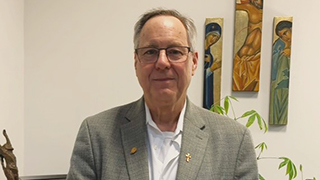
Deacon Andrew Saunders, M.A., co-director of ICSST’s 4:12 Pathways for Pastoral Leadership grant initiative
Seton Hall University's Immaculate Conception Seminary School of Theology (ICSST) hosted a morning of reflection on December 13, 2025, as part of its Many Faces of Hospitality series sponsored by the Preaching as Hospitality Formation Program. The program, “Diakonos and Hospitality in the Early Church and Today,” was led by Deacon Andrew Saunders, M.A., co-director of ICSST’s 4:12 Pathways for Pastoral Leadership grant initiative and Deacon Peter Cistaro, M.B.A., adjunct professor of Pastoral Theology and former director of the Office of the Permanent Diaconate for the Diocese of Paterson, New Jersey.
Participants gathered in Bethany Hall for Mass and breakfast before Deacon Saunders’ two detailed presentations on the diaconate in early church history and in the modern era. Deacon Cistaro led reflections after each talk and attendees shared observations and lessons during table discussions. The event drew 52 people, including ICSST alumni, deacons, diaconal candidates and local parishioners.
From the Greek words “diakonos” and “diakonia,” meaning “servant” and “work of a servant,” the role of a deacon is to be in the service of the Church. Deacon Saunders unpacked diakonos and diakonia from a biblical perspective, emphasizing the importance of service through Christ’s words and actions of hospitality. Especially with the washing of the feet of His disciples at the Last Supper, Jesus set the tone through His own service, His own diakonia. “Jesus taught the faithful, all of us, not just deacons, but all of us who are baptized, that faithful service is an essential part of Christian life,” Deacon Saunders said. “‘The Son of Man came not to be served, but to serve’ (Mt 20:28) …Jesus identifies Himself as a diakonos.”
Being a diakonos of the Church means showing hospitality as “servants” and “sentinels.” Deacon Saunders noted the seven men chosen by the apostles were leaders in the Hellenistic community who served the table of the widows not just as simple servants but by ministering the Word of God at the table. With their “table” being their communities, deacons can bring God’s Word to those who strive to hear it. A deacon’s role as a sentinel, Deacon Saunders explained, is to look out for people in need and bring them to the Church, to “see beyond us, to look outward, not within.” Being a sentinel makes the diaconate, according to then-Cardinal Robert Prevost at the 2025 Jubilee of Deacons, “welcoming to those in need by providing comfort, solace and watching for those who are suffering.” In this way, deacons become the face of a hospitable and “welcoming Church.”
Servants and sentinels were shaped by the institution of the diaconate in the Acts of the Apostles, with St. Stephen leading the charge to serve the tables of early Church diaconal ministry through preaching, evangelizing and building up the community of believers. Deacon Saunders described St. Stephen’s “relentless” ministry, inspiring others to proclaim the Word with zeal and energy as a model for today’s diaconal leaders. “Stephen’s life and martyrdom had this profound impact on the early Church, encouraging the faithful to boldly proclaim the Gospel in the face of persecution,” he said.
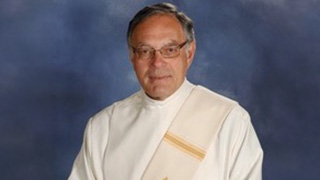
Deacon Peter Cistaro, M.B.A., adjunct professor of Pastoral Theology
Deacon Cistaro concluded the discussions by sharing examples from his diocese of how servants and sentinels can put their work — their diakonia — into action. He spoke of a deacon who founded Operation Chillout, an organization dedicated to serving homeless veterans across the Northeastern United States and of deacons who assist in housing developments for low-income seniors in the Diocese of Paterson. Other deacons of the diocese have volunteered with Catholic Charities and spent time at a local hospital comforting people who were suffering. It is these actions, Deacon Cistaro emphasized, that exemplify what it means to be a hospitable diakonos. “We don’t want to stand in the corner and wait for somebody to come to us to say ‘hello,’ we want to be the first ones to walk out, to greet people,” he stressed. “We need to physically show the joy and the love that we have in our hearts.”
“As a part of agape love, we must be the outreach to others. As an aspirant, I feel like this is another layer of my vocation,” one participant stated.
The Preaching as Hospitality Formation program of Immaculate Conception Seminary School of Theology seeks to form seminarians, diaconal students and religious and lay graduate students of theology to be compelling preachers who will offer a hospitality of the heart as they break open the Word of God. The initiatives help to form preachers who will understand and embrace preaching as hospitality a ministry of inviting, welcoming and offering compassion. The program also focuses on newly ordained priests and deacons and newly appointed pastors (less than five years) who are invited to re-imagine their preaching through the lens of Christian hospitality.
To learn more about Many Faces of Hospitality, or ICSST’s Preaching as Hospitality Formation Program, please contact Alyssa Carolan at [email protected].
Categories: Faith and Service